

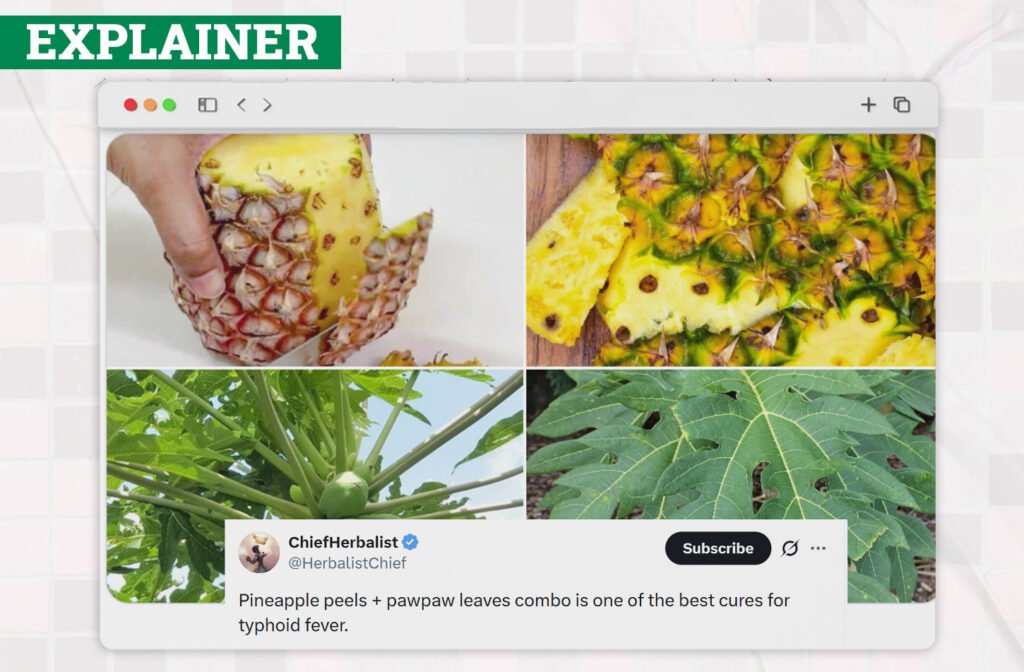
Pawpaw Leaves and Pineapple Peels: Can They Really Cure Typhoid?
In late July 2025, a post on X (formerly Twitter) sparked renewed debate over traditional remedies for serious illnesses. User @HerbalistChief claimed that a tea made from pawpaw (papaya) leaves and pineapple peels could cure typhoid fever. The post, accompanied by images of the leaves and peels, instructed:
“Boil a handful of pawpaw leaves with pineapple peels for 20–30 minutes. Drink a teacupful of the extract twice daily for 5 days. Nature heals.”
A similar claim was circulated on Facebook on August 4, 2025 by Nickyherbalists. The marketing of herbal remedies as a definite cure for typhoid is not a recent trend. These social media narratives often present herbal treatments as a replacement for hospital visits and verified medical intervention.
In November 2023, @Nig_Farmer on X, asserted that drinking a tea extract from cloves gives a permanent cure to typhoid. When fact checked, it was realised that clove extract contains compounds like eugenol that can inhibit or disrupt bacterial cells in laboratory (in vitro) experiments. In some studies, clove extracts showed inhibitory effects against bacteria including Salmonella species under controlled conditions.
NV-A contacted a physician at the Federal Medical Center in Yenagoa, Bayelsa State, Dr. Onome Danielson, who emphasised that “typhoid fever is treated with antibiotics such as ciprofloxacin or ceftriaxone, as prescribed by a health professional.” He added that “although clove has antibacterial compounds and is used in some traditional remedies to provide relief or complement care, this does not provide a definite cure for typhoid.” He concluded that “there is NO CLINICAL EVIDENCE showing that clove tea cures typhoid in people”
Similarly, TikTok user, oyinade_healthyhaven claims drinking tea made from guava leaves is a cure for typhoid. A look into this claim shows that laboratory (in vitro) studies have found that extracts from guava leaves can inhibit the growth of Salmonella typhi bacteria in petri dishes, meaning the plant compounds may have antibacterial effects in a controlled lab setting. These studies are not the same as clinical trials in humans. Lab antibacterial activity does not automatically translate into a safe or effective treatment for people. Most studies use concentrated extracts with solvents like methanol, not just tea made by boiling leaves.
Dr. Onome Danielson cautioned against the random use of herbs for treatment, noting that “this might damage some organs like the liver and kidney.” Onome stressed that “although guava leaf extracts can show antibacterial activity against Salmonella typhi in laboratory settings, it is not an approved or medically recommended treatment for typhoid.”
Understanding Typhoid Fever
Typhoid fever is a serious, potentially life-threatening illness caused by Salmonella enterica serotype Typhi, according to the World Health Organisation (WHO). The bacterium spreads through contaminated food and water, and humans are the only known reservoir. Symptoms include prolonged fever, weakness, stomach pains, headache, and, in severe cases, intestinal bleeding.
Modern medicine treats typhoid with specific antibiotics, guided by laboratory confirmation of infection through blood or stool cultures. Without proper treatment, complications and fatalities are common.
What Science Says About Pawpaw Leaves and Pineapple Peels
Some laboratory studies show that pawpaw leaf extracts can inhibit Salmonella Typhi under controlled conditions. Methanol, ethanol, and hot-water extracts of pawpaw leaves have demonstrated bactericidal effects in vitro. In Nigeria, reviews of traditional medicines report that pawpaw and other plants are commonly used as folk remedies for typhoid.
Pineapple peel, meanwhile, contains compounds with anti-inflammatory properties and is used in traditional medicine for ailments like malaria and arthritis. However, there is no robust evidence that it combats typhoid specifically.
Voices From The Field
Experts caution that lab findings do not automatically translate into real-world cures.
Dr. Onome Danielson, a physician at the Federal Medical Center in Yenagoa, Bayelsa State, warns:“Those traditional treatments can do more harm than good due to toxic chemicals that may damage the body. Visit a hospital for proper treatment of typhoid fever. There is no scientific evidence supporting these claims.”
Plant scientist, Ifiok Akwaowo from the University of Uyo adds:“Research exists, but it is still in the laboratory stage. These mixtures could even be dangerous to the liver during breakdown. Anyone suspecting typhoid should seek immediate medical attention, and diagnosis should be confirmed through blood or stool culture.”
The Bottom Line
While pawpaw leaves and pineapple peels are being studied for potential antimicrobial properties, no clinical trials validate that boiling them together cures typhoid. Relying on such herbal concoctions instead of antibiotics is risky and could endanger lives.
For now, typhoid remains a disease where science and proper medical care are irreplaceable.