

In Africa, Whatsapp has become more than just a messaging platform, it is the primary source of News, and political discourse for millions.
Affordable data plans, low device requirements, and its end-to-end encryption has made Whatsapp the continent’s communication lifeline. However, these same features have also turned it into a fertile ground for misinformation, with profound consequences for public trust, governance, and even public trust,governance, and public health.
One of WhatsApp’s most significant strengths is also its biggest vulnerability: Trust.
Unlike public social media platforms where information often comes from strangers or official pages, messages on whatsapp typically come from family members, friends, and community groups. This social proximity lends a sense of credibility to forwarded content, even when its entirely false.
A video or voice note sent by a cousin or church member is often taken at face value, bypassing the usual skepticism people might have toward random online posts. That trust becomes a powerful accelerant for misinformation
Whatsapp’s end-to-end encryption ensures that only senders and receivers can see messages, not even the company itself. While this protects users from surveillance, it also creates what researchers call a “closed garden” for information flow.
Inside these private spaces, misinformaton is difficult to track or fact-check, because there’s no public feed or searchable archive. Harmful claims from health hoaxes to political propaganda, can circulate unchecked for weeks before they surface in discourse.
When Was Forwarded Many Times Introduced?
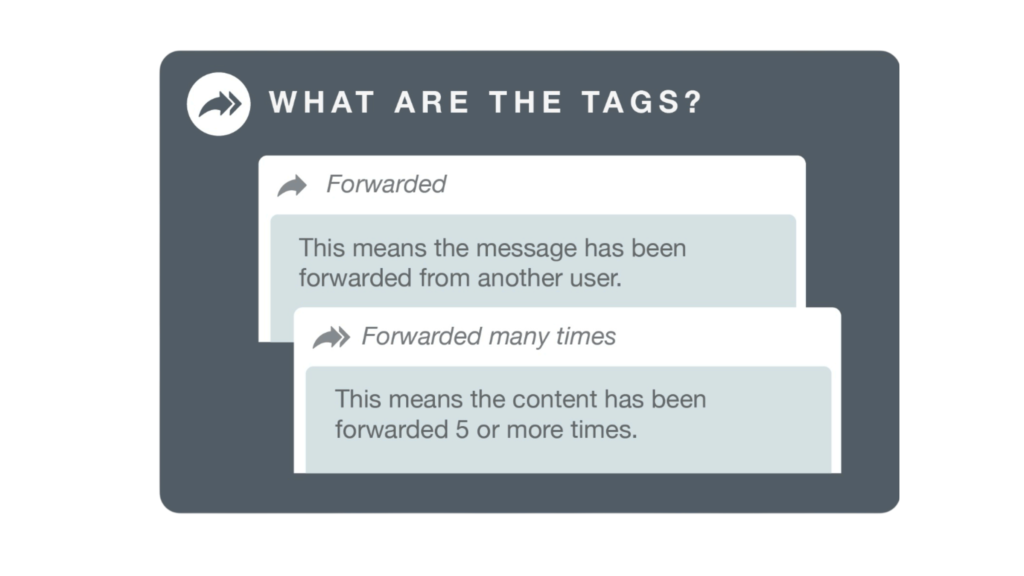
Whatsapp introduced the “Forwarded many times” ‘FMT, label in August 2019. The feature was part of WhatsApp’s broader efforts to curb the spread of misinformation and viral hoaxes, especially after incidents where false information on the platform had been linked to mob violence and other and other-world harm.Messages that have been forwarded more than five times are marked as “Forwarded many Times” instead of the standard “Forwaded,” it helps user recognise when content is not original from their contact but has been passed along repeatedly, which may encourage skepticism about its accuracy.
Adding New Features That Aids And Abet Misinformation Spreads
WhatsApp makes it possible that some one cannot forward messages to more than one chat at a time, which helps to limit or slow down viral spread, and it does not show the original sender’s details for privacy reasons.
The app encourages frictionless sharing. With just two taps, a message can be forwarded to multiple individuals or groups, reaching hundreds in seconds.
Forwarded content often comes with no source attribution, and because it is easy to strip context when forwarding , an old video can be recirculated as “breaking news” or a rumour can simply be resurfaced through repetition.
During crises, whether elections, disease outbreaks, or security incidents, this forwarding frenzy can spark panic and a dangerous narrative before facts are established.
Why “Forwarded Many Times” Is Not Enough
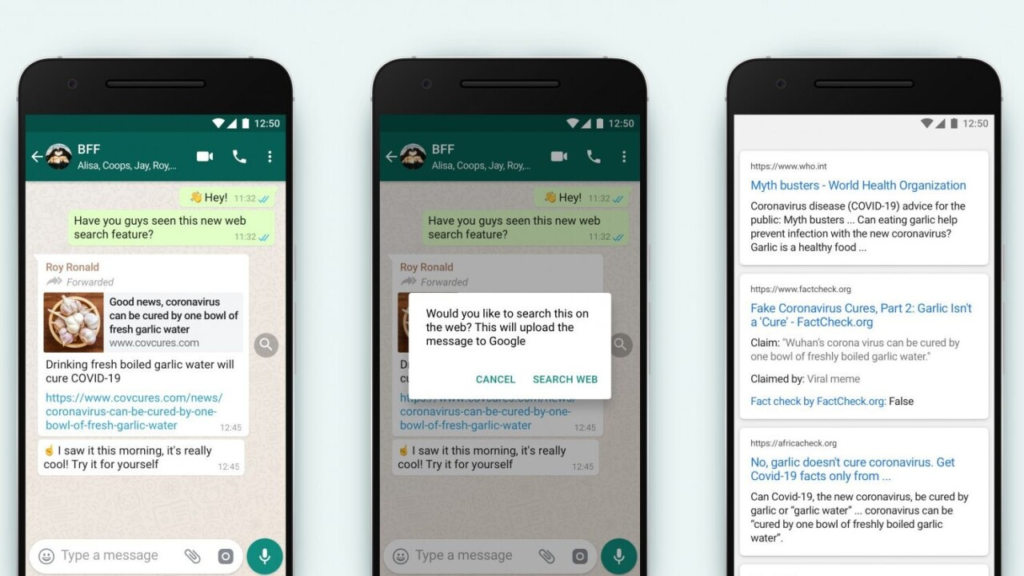
According to “The Verge”, WhatsApp introduced limits on message forwarding and labels like “Forwarded many times” to slow virality. While these measures help, they do not address the deeper social dynamics at play. According to the Loughborough University report, the label does not reduce trust, it may even increase it, signalling that “many people believe this.”
The African Journalism Studies highlights that information flows in Africa are shaped by histories of colonialism, state propaganda, economic inequality, and distrust of authority. Misinformation exploits these realities rather than creating them.
The Role of Government
The International Journal of Press/Politics noted that misinformation on WhatsApp is not always accidental. Political actors, interest groups, and foreign influence campaigns have learned to weaponize the platform. Because messages are private and difficult to trace, accountability is minimal. False narratives can be tested, refined, and redeployed with little risk.
The International Journal of Communication wrote that governments sometimes respond by proposing internet shutdowns or sweeping regulations, which can restrict freedom of expression and harm legitimate communication. This creates a dangerous cycle where misinformation justifies repression, and repression fuels further distrust.
“Forwarded many times” is more than a WhatsApp label, it is a symbol of how information now moves across Africa: fast, emotional, social, and often unchecked. WhatsApp has empowered millions by connecting them, but it has also exposed deep vulnerabilities in information ecosystems.

The challenge is not to reject WhatsApp, but to rethink how trust, technology, and truth intersect in African societies. Without deliberate action, misinformation will continue to exploit the very networks meant to bring people closer together. With the right interventions, however, those same networks can become powerful tools for resilience, accountability, and informed public life.