
AI is rapidly transforming the media world, reshaping how news is created, distributed, and consumed. From automated journalism and personalized content recommendations to advanced tools for editing, fact-checking, and audience engagement, Al has become a powerful force driving innovation in the industry. While it offers opportunities for efficiency, accuracy, and deeper insights into audience behavior, it also raises important concerns about ethics, misinformation, and the future of human creativity in journalism and storytelling. Understanding the impact of Al in the media world is therefore essential to navigating its promises and pitfalls in an ra defined by digital disruption.
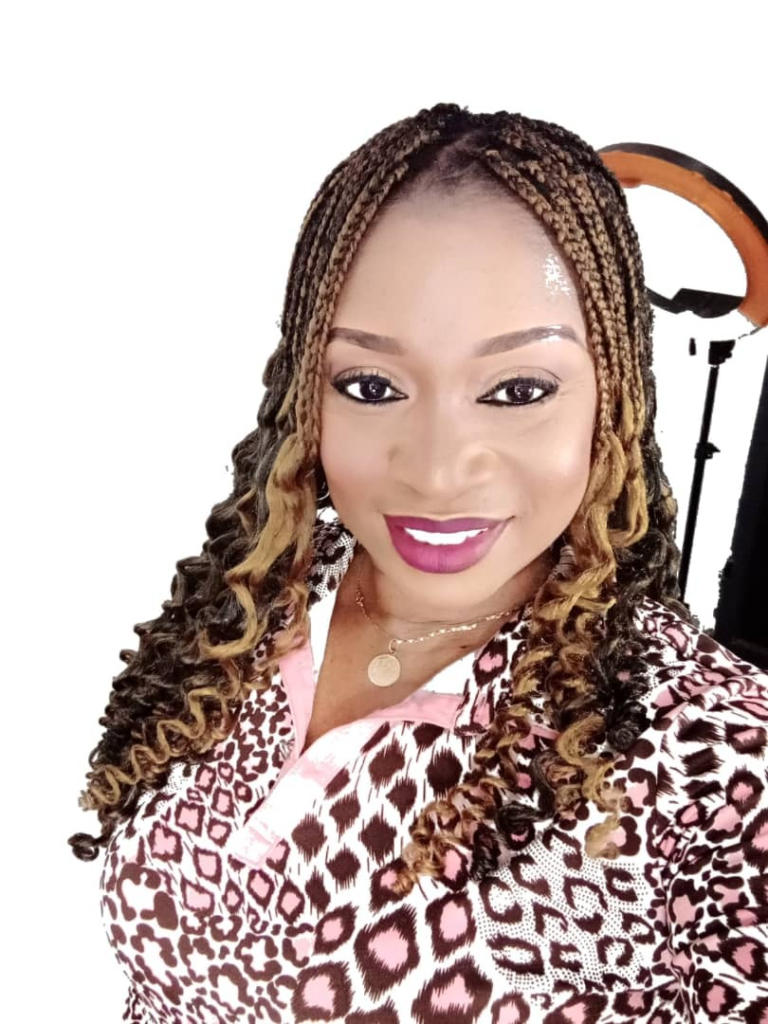
NV-A had a chat with Mrs Lola Oduba Omokri, a seasoned broadcaster, TV/Radio host, whose experience in the media world spans from when broadcast was analog down to now that AI has come to stay.
Can You Introduce Yourself And Your Role In The Media Industry?
My name is Lola Oduba Omokri, a media executive and head of contents for the Ombudsman’s Radio, which is an arm of the Public Complaints Commission and of course, a media executive, a television producer, content strategist, and of course, a host. When I say broadcast, I’m talking television, mainly, and now, radio, fashion, corporate media, helping just to shape narratives, create engaging programs, develop programs, develop content across board, and my passion, of course, is to mentor the young voices coming into the industry.
How Long Have You Been in this Field And What Major Changes Have You Made Over Time?
I’ve been in this field for as long as I can. This is the only thing I’ve done, the media space. I’ve been in this field right from when I finished secondary school and of course I didn’t start on television, I started as a model. I was modeling for calendars and doing adverts for television. That’s how I started over 20 years ago. I’ve witnessed a lot of changes. The changes I’ve witnessed come from the rise in technology.
During our own time, we had to sit for hours to shoot and record a commercial or you’re trying to host the program on TV, you’d be sweating due to the hot camera lights and everything, but now too much has changed due to the advent of technology, which has come to make things easier. Well, of course, you know, also that, everything was much more manual then, from news gathering to editing and even content distribution.
I’ve witnessed a lot of changes. The changes I’ve witnessed come from the rise in technology.
How Will You Define Artificial Intelligence In The Context Of Media And Journalism?
In simple terms, I’ll define Al as technology that mimics human thinking to simplify and speed up processes. In media and journalism, AI has become a sort of assistance. It’s a sort of assistant that helps with research, fact-finding, content generation, editing, and even predicting audience preferences. But again, I want to add something that even with Al there has to be that personal touch that makes it unique and original to you.
What Was Your Initial Reaction To AI Driven Tools Being Introduced Into Media Practice?
Well, Al driven tools have come to stay, and of course will navigate the future of media. Honestly, I was skeptical at first because I felt that Al might replace human creativity or even make some rules redundant. But over time, I have come to see it more as a complementary tool, something that doesn’t replace the human touch, but rather supports it when used wisely.
In What Ways Has AI Changed Editorial Workflows Like Research, Writing, And/Or Editing?
Tremendously. Today, Al tools can summarize complex documents in seconds. I remember back then, you would spend hours just trying to gather news, trying to, you know, edit what needs to go out, what needs to come on, what needs to be added, what needs to be real. But Al has simplified everything and in short notes, Al just takes out the points and gives you what to do. Today, Al tools can summarize complex documents, suggest headlines, and even detect grammatical or tonal inconsistencies in scripts.
In editing, as you know, Al has introduced automation like auto cuts, sound balancing, or even subtitling, reducing the workload and freeing us up to focus on the creative side.
I was skeptical at first because I felt that Al might replace human creativity or even make some rules redundant. But over time, I have come to see it more as a complementary tool.
Do You Think Al Enhances Creativity And Storytelling Or Does It Limit Human Originality?
Well, I think it really depends on how it’s used. Al can provide fresh angles, help visualize ideas, and speed up exe-cution, which definitely enhances cre-ativity. But now, If people lean on it too heavily, you can’t tell that, you know, that human touch for me still needs to be there.
Maybe because I’m old school, you know, we’re used to thinking of the process, cooking up the process, and just imagining what it will turn out to be. So for me, I use it after I’ve finished my original content.
How Would You Compare Using AI Tools For Content Creation As Against The Manual Approaches You Earlier Mentioned?
Content creation today is faster, more efficient. What used to take days can now be done in hours. You know, I remember editing, you have to sit and sit but now, we have so many tools that just do the editing and everything. In those days, it would take you hours, nights, in the studio, but now, you can still take those nights in the studio, but it’s not cut and join like we used to do. So, obviously, content creation today is faster, more efficient, though the former manual approach had its own charm because you put in your blood, tears and sweat to make sure that everything comes out the way you want it to. So that’s the difference. It takes away a bit of the originality, but again, as I see it, I use it after I finish my original content because I want that touch, that thing that comes from me alone, to be there.
I remember editing, you have to sit and sit but now, we have so many tools that just do the editing and everything.
However, the former manual approach had its own charm, because I remember back then when I was doing the program Exposé, on major Nigerian network stations, Silverbird, to MBI, to Link 65, which is now known as TVC, Plateau State Broadcasting and Imo State Broadcasting. So many networks that we were on then and but you see, the charm then was that you thought about everything yourself, everything was original. With my brand, Exposé TV streaming on different social media platforms, you can see that AI tools are incorporated. So, AI is a blessing.
On The Flip Side, Are There Areas Where AI Has Created Challenges Or Complications In Media Practice?
Yes, one major challenge is the rise of misinformation. You know, with AI tools capable of generating defects or spreading false content quickly, journalists now face the extra task of verifying authenticity. Another issue is over-reliance, as some professionals may skip through research, trusting AI completely, which can be risky.
The impact of Artificial Intelligence on the media world is both transformative and complex. From streamlining news production and personalising content to combating misinformation and enhancing audience engagement, AI is reshaping how information is created, distributed and consumed. However, it also raises ethical concerns around bias, transparency and the potential loss of human creativity. As the media industry continues to embrace AI, striking a balance between technological efficiency and responsible journalism will be key to ensuring that innovation serves the public interest.