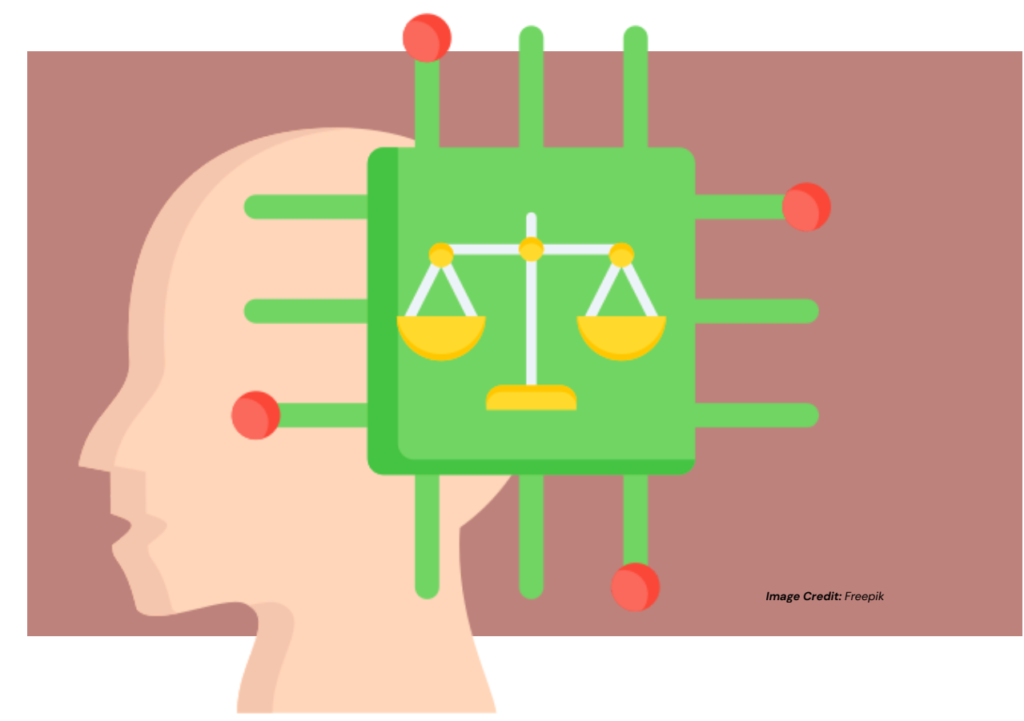


AI and Governance
The integration of Artificial Intelligence (AI) in Africa is rapidly transforming various aspects of life, moving beyond abstract concepts to tangible applications in governance, elections, and public service delivery. For instance, Kenya,Nigeria, Sierra Leone, South Africa have all deployed AI technology in different forms for election monitoring and other governance-related purposes including social data gathering.

This pervasive presence of AI in critical sectors of our daily lives and public governance cannot be overemphasised, especially since it has a dual impact, often described as both “promising and perilous.” The question now remains whether AI can genuinely strengthen governance and foster development, or if opaque systems and the proliferation of misinformation will instead deepen mistrust and exacerbate existing inequalities across the continent.
Amidst all these technological breakthroughs, the central question on the African continent certainly remains, ‘how and who holds the algorithm accountable?’
AI’s Emerging Role in African Governance
The African Union (AU) recognises AI as a strategic priority for socio-economic transformation, due to how it enhances public service delivery, streamlines bureaucratic processes, reduces corruption, and improves citizen engagement.
In Lagos, Nigeria, the tax-revenue AI chatbot “Madam Shikini” is improving public service efficiency by automating inquiries about government services. AI-driven applications have also led to increased crop yields in Kenya and South Africa through precision farming, weather forecasting, and plant disease detecсtion.
Rwanda’s Irembo platform provides over 100 government services and has significantly reduced processing times and saved citizens millions of working hours annually. Beyond these, AI is also bolstering electoral integrity through data analysis, voter authentication, and cyber threat detection.
Misinformation Spread, Risks, and Power of AI in Africa
AI’s use in Africa is tempered by significant risks, particularly concerning opaque algorithms, the proliferation of digital misinformation, and equity concerns. A critical question is who audits AI tools used in sensitive areas like elections, policing, or social programs.
Many AI systems are developed in non-African contexts and are trained on biased datasets, potentially exacerbating existing disparities and disadvantage African users. The lack of transparency in how these complex algorithms make decisions can lead to mistrust and skepticism, especially given prevalent concerns about data privacy and surveillance by foreign companies operating AI systems in Africa.

Moreover, equity concerns are also paramount. Africa faces a significant digital divide, characterized by inadequate internet access, unreliable electricity, and limited computing resources, espеcially in rural areas. This infrastructure gap hinders widespread AI adoption and the uniform implementation of governance measures, effectively entrenching existing inequalities and reinforcing discrimination. The phenomenon of ‘ethics dumping,’ where foreign companies exploit weak regulations in developing countries, further compounds these issues. Critically, Africa’s limited participation in global AI governance forums also restricts its influence on shaping international standards, perpetuating a reliance on external systems that may not align with local values or address local needs.
On top of it all is the proliferation of digital misinformation and disinformation. Often spread via AI-generated content like deepfakes, poses a significant threat, particularly in electoral contexts. While deceptive AI use in African elections has been evolving, ехperts warn it will intensify as more people acquire the necessary skills. AI-generated contents continually erode public trust in news and the shift to democratic processes is detrimental for governance and politics. For instance, a couple of leaked deepfake audios purported to depict a secret conversation planning to compromise the elections was widely distributed during Nigeria’s 2023 general elections, highlighting the risk to democratic processes. All this goes to show that as promising as AI technology is within African context, it has its perilous side which could be the undoing for the African continent unless there is a reasonable semblance of regulatory laws and policies in place to curtail its excesses.
Gaps in Africa’s AI Governance and Accountability
Currently, the rapid pace of AI innovation frequently outstrips the regulatory capacities of African governments, creating a regulatory vacuum that leaves the continent exposed to potential exploitation and unaddressed risks. This is evidenced by a study revealing that countries with national AI strategies, such as Kenya, South Africa, and Rwanda, showed slight improvements in government effectiveness between 2013 and 2022. In stark contrast, countries without AI strategies experienced a decline in effectiveness between the same period, reinforcing the urgent need for AI-driven governance reforms.
Evidently, there are several critical gaps in governance and accountability that hinder the responsible and equitable development of AI. Primarily, there is а lack of comprehensive, modern regulatory frameworks specifically tailored to the complexities of AI technologies. Most existing policy frameworks are in their nascent stages, leaving AI deployment largely unregulated, without enforcement and oversight mechanisms. Some countries are in the process of establishing formal institutions like the AI Safety Institutes while Ghana is proposing a Responsible AI (RAI) Office.
However, there is still a robust absence of independent AI ethics boards in African nations. On the accountability side, there are no clear appeal mechanisms when algorithms fail citizens, implying that current frameworks in Africa do not adequately protect individuals’ rights when negatively impacted by AI systems. Moreso, public participation in AI policymaking is often limited, raising concerns that policies are crafted without meaningful input from the communities they are meant to protect.
Plugging the Gaps in AI Governance and Accountability
Techpoint Africa’s article on the topic rightly points out that for AI policies in Africa to succeed, they must break free from a “copy and paste” approach, emphasizing that the policy’s form is а direct reflection of “who was in the room when it was being drafted.”

Therefore, a guiding recommendation is to prioritize inclusive, context-specific policy development that genuinely reflects Africa’s unique socio-economic realities and cultural values.
To achieve this, it is paramount for African nations to foster broad and meaningful multi-stakeholder participation in policy formulation. This collective engagement, involving local communities, civil society, fact-checking organisations, academia, and the private sector, is essential to ensure that policies not only stimulate innovation but also rigorously protect human rights, address biases, and mitigate the risks of “AI colonialism” or technological dependency on foreign systems.
Furthermore, policies should actively support local innovation and capacity building, cultivating homegrown AI talent pipelines and promoting the development and use of diverse, relevant local datasets that accurately reflect African contexts, rather than relying on external information that may perpetuate biases.
This integrated approach also necessitates substantial investment in robust digital infrastructure including reliable internet and compute capacity, and the establishment of ethical governance frameworks that uphold principles of fairness, transparency, and accountability to build and maintain public trust.
Ultimately, strengthening intra-African collaborations and fostering a unified African voice in global AI governance discussions is crucial to ensure the continent’s unique challenges, opportunities, and perspectives are adequately represented and its interests safeguarded on the international stage. The end still justifies the means; Africa’s successful navigation of the AI era hinges on its ability to transcend imported models and collaboratively forge policies deeply rooted in its diverse local realities. Hence, a bold, proactive stance, empowering Africa to define and lead its own AI future, ensuring the technology serves as a true catalyst for inclusive progress in governance and politics, tailored to suit everyday African lives and contexts.