
Is Global Warming Making The Earth Colder?
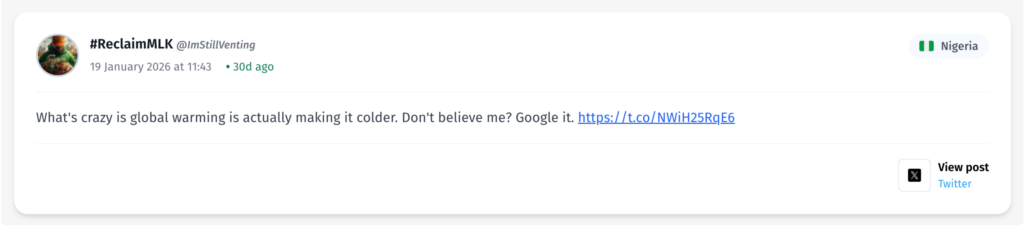
On January 19, 2026, an X user, @ImStillVenting claimed that global warming is making the world colder. This claim is a quoted post, shared on January 19, 2026 was picked from the SPOTAI platform, a disinformation tracker tool. The X user’s post was a quote to an original post with a news report screenshot about a freezing and possible snow warning in Tallahassee, Florida in the United States.
VERIFICATION
NV-A undertook a text verification to see how viral this claim has gone, and it was found that similar claims have been circulating since 2023.
This claim has been pushed by Steve Milloy (@JunkScience) on X, formerly known as Twitter.
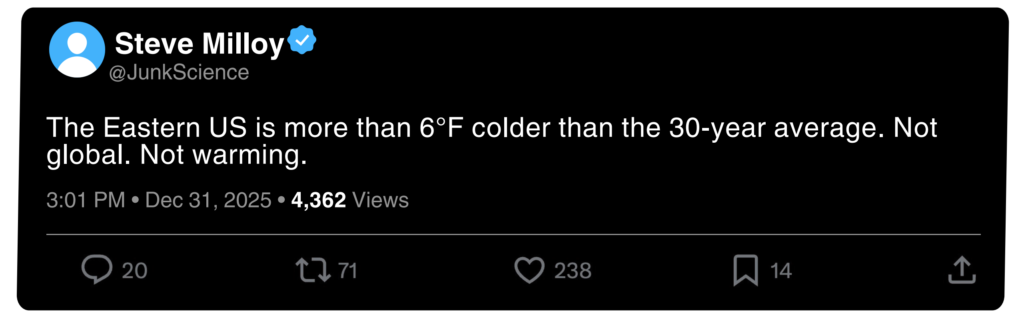
Steven J. Milloy is an American lawyer, lobbyist, author, and former Fox News commentator. Milloy is the founder and editor of the blog JunkScience.com where he publishes articles that oppose and attack environmental and public health science. Milloy ran The Advancement of Sound Science Coalition, TASSC’s website, Junkscience.com, which was dedicated to debunking what he alleged to be false claims regarding passive smoking, global warming, dichlorodiphenyltrichloroethane (DDT), environmental radicalism and scare science among other topics.
Climate change does not simply mean warmer temperatures everywhere. It refers to long-term disruptions in Earth’s climate systems, which can lead to more extreme weather, including dangerous cold spells.
What Does The Science Evidence Say?
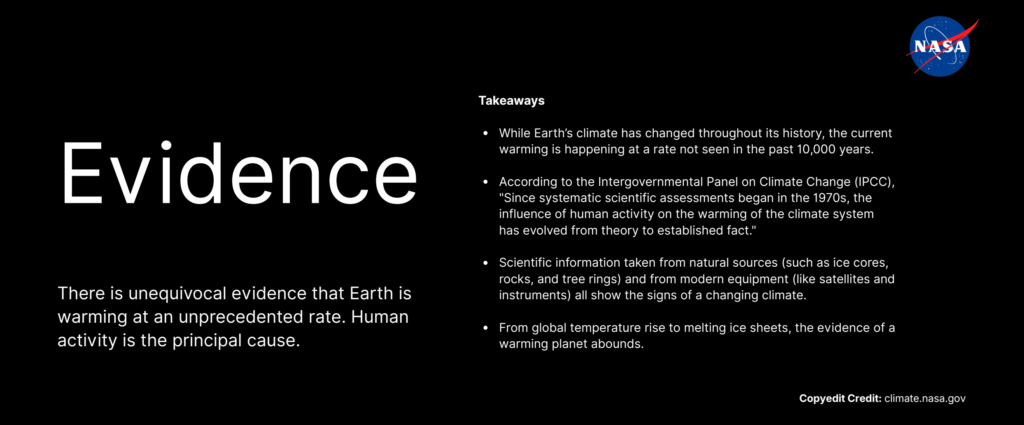
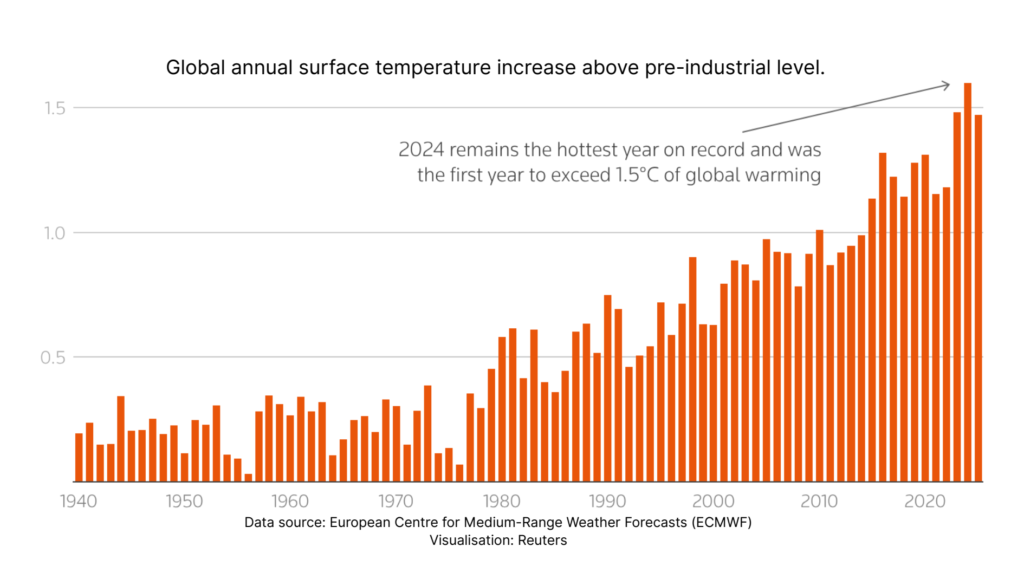
According to NASA, global average surface temperatures have risen significantly over the past century, especially in recent decades.
The World Meteorological Organisation, WMO’s recent global data obtained by Reuters, show 2025 ranked among the three warmest years on record.
NASA confirmed that more than 90% of excess heat from greenhouse gases goes into the oceans, increasing total heat content even if short-term surface temperatures fluctuate. Oceans absorbed a record amount of heat in 2025, a strong indicator that the Earth is accumulating energy, not cooling, according to Live Science.
Scientists have also said that global sea ice fell to a record low, a symptom of an atmosphere fouled by planet-heating pollutants. They observed an extreme heat anomaly in the north pole at the start of February 2025, which caused temperatures to soar more than 20C above average and cross the threshold for ice to melt, the Guardian wrote. They described the latest broken record as “particularly worrying” because ice reflects sunlight and cools the planet.
Why People Think The World Is Getting Colder
Global warming is about long-term trends in the average temperature of the entire planet over decades. Even if it is very cold in one place for a few days, that does not reverse a long-term trend of rising average global temperatures.
The United States Environmental Protection Agency (US EPA) noted that across much of the world including large parts of the U.S., heatwaves and high temperature records are far more common and intense. Scientists document that extreme heat events are increasing in frequency and severity because the baseline climate is warmer.
According to CNN, some kinds of extreme cold spells, like severe winter storms in the U.S., can be connected to global warming through changes in atmospheric circulation. AP News wrote that warmer arctic temperatures can weaken the polar vortex and jet stream, allowing cold Arctic air to plunge farther south than usual. This does not mean the Earth is cooling. Rather, it means that the distribution of temperatures is changing in a way that can produce both unusual heat and occasional cold extremes.
The United Nations Climate Action stated that short-term cold events or cold seasons in particular regions do not mean the planet as a whole is cooling. Weather varies day-to-day; climate is the long-term average. Occasional cold snaps can happen even on a warming planet.
Dr. Eteng Otu, a lecturer with the department of Education and Geography, University of Calabar, stated that the snow storms in the U.S. and Canada is not a supportive evidence of the claim. He said, “a big snowstorm doesn’t mean the Earth is getting colder, it actually fits with what we expect from global warming.”
Pointing out that “a cold week or even a brutal winter like what is happening in North America, is like one bad day in a long-term health chart.” Otu added that “the snowstorm in North America is not evidence against global warming, but rather a symptom of a more energetic, unstable climate system.”
A lecturer of Climatology, with the department of Geography and Environmental management, University of Port Harcourt, Dr M. Kpang explainedwhy warming can cause more snow. He noted that “warmer air holds more moisture, which implies that global warming heats the oceans, leading to more evaporation. So, if temperatures are still below freezing, all that extra moisture falls as heavier snow, not rain.” Kpang added that “a warmer planet can produce stronger snowstorms, not fewer.” He concluded that climate change does not mean “no more cold”, rather, it means “more extremes.”
NASA also affirms that natural patterns like La Niña or ocean cycles can temporarily slow surface warming or cause cooler than average temperatures in certain places for a few years, but these short-term variations occur against a long-term warming trend. In a changing climate, some specific locations or seasons might experience cooler conditions even though the global average temperature continues to rise. This is expected but does not mean the world is cooling overall.
CONCLUSION
The claim that global warming is making the world colder is MISLEADING. Climate change does not simply mean warmer temperatures everywhere. It refers to long-term disruptions in Earth’s climate systems. These changes lead to more extreme weather, including dangerous cold spells and even warming can cause more snow.